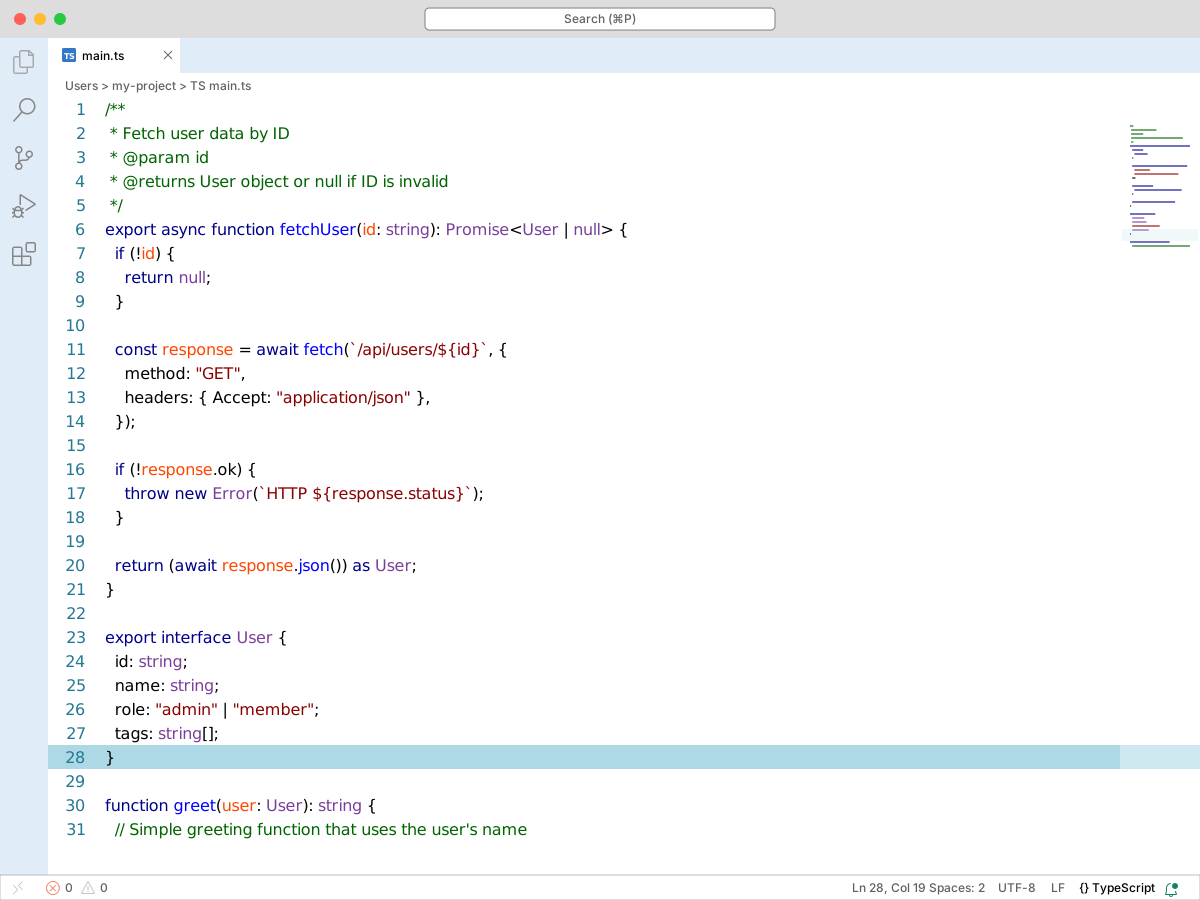
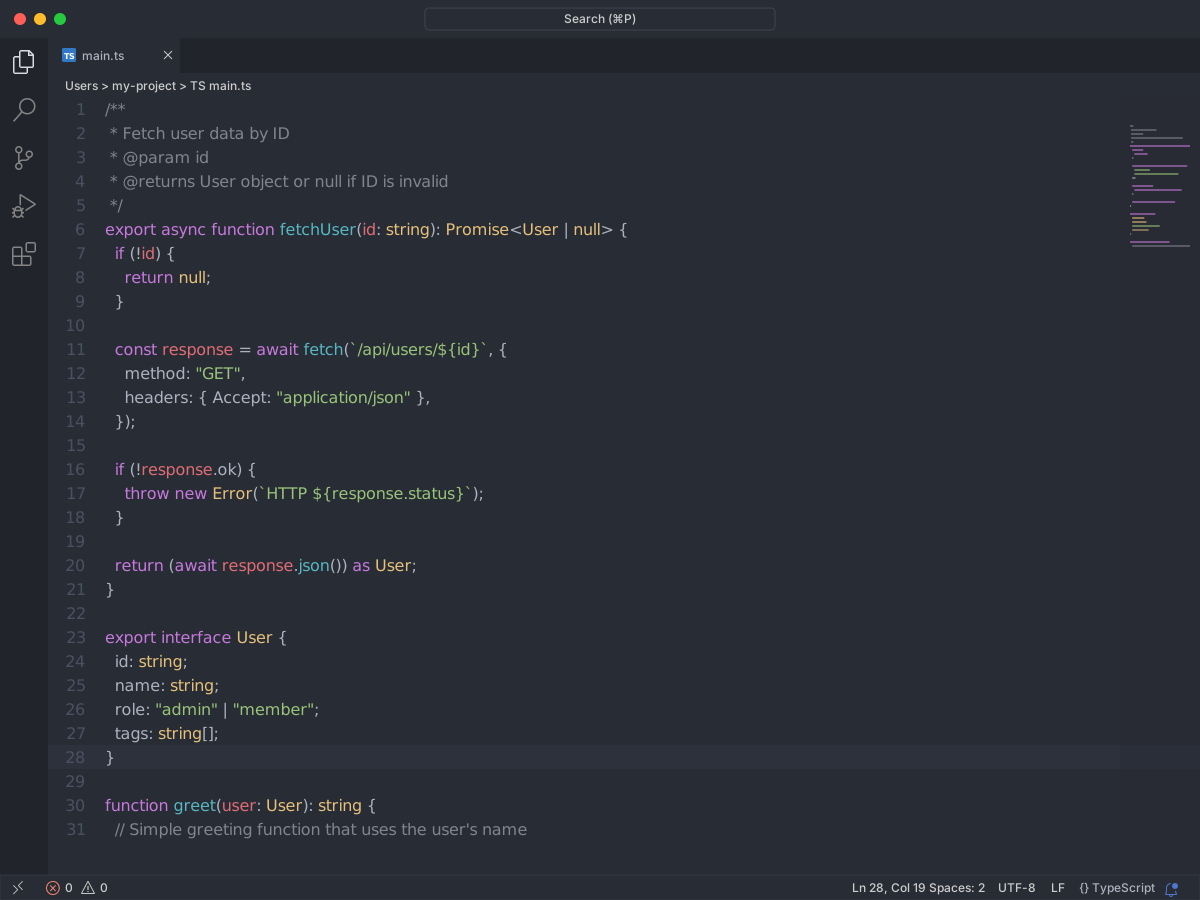
Full workbench mockup using this variant's colors and tokenColors.
Loading...
colors
Workbench UI color keys from the theme JSON colors map.
key
HEX
RGB
RGBA
activityBar.background
activityBar.foreground
breadcrumb.activeSelectionForeground
breadcrumb.background
breadcrumb.foreground
editor.background
editor.findMatchBackground
editor.findMatchHighlightBackground
editor.findRangeHighlightBackground
editor.foreground
editor.inactiveSelectionBackground
editor.lineHighlightBackground
editor.lineHighlightBorder
editor.selectionBackground
editor.selectionHighlightBackground
editor.wordHighlightBackground
editor.wordHighlightStrongBackground
editorBracketHighlight.foreground1
editorBracketHighlight.foreground2
editorBracketHighlight.foreground3
editorBracketHighlight.foreground4
editorBracketHighlight.foreground5
editorBracketHighlight.foreground6
editorCursor.foreground
editorError.foreground
editorIndentGuide.activeBackground1
editorIndentGuide.background1
editorLineNumber.foreground
editorWarning.foreground
notifications.border
notificationToast.border
panel.border
panelTitle.activeBorder
sideBar.background
sideBar.foreground
statusBar.background
statusBar.foreground
tab.activeBackground
tab.activeBorder
tab.activeForeground
tab.border
terminal.background
terminal.border
titleBar.border
tokenColors
Foregrounds this theme assigns to the token scope catalog. A rule with only a font style is skipped, and a longer matching scope wins. Italic and bold rules are not listed — the preview above shows them in the code.
export interface User { id: string; name: string; role: "admin" | "member"; tags: string[];}/** * Fetch user data by ID * @param id * @returns User object or null if ID is invalid */export async function fetchUser(id: string): Promise<User | null> { if (!id) { return null; } const response = await fetch(`/api/users/${id}`, { method: "GET", headers: { Accept: "application/json" }, }); if (!response.ok) { throw new Error(`HTTP ${response.status}`); } return (await response.json()) as User;}function greet(user: User): string { // Simple greeting function that uses the user's name return `Hello, ${user.name}!`;}